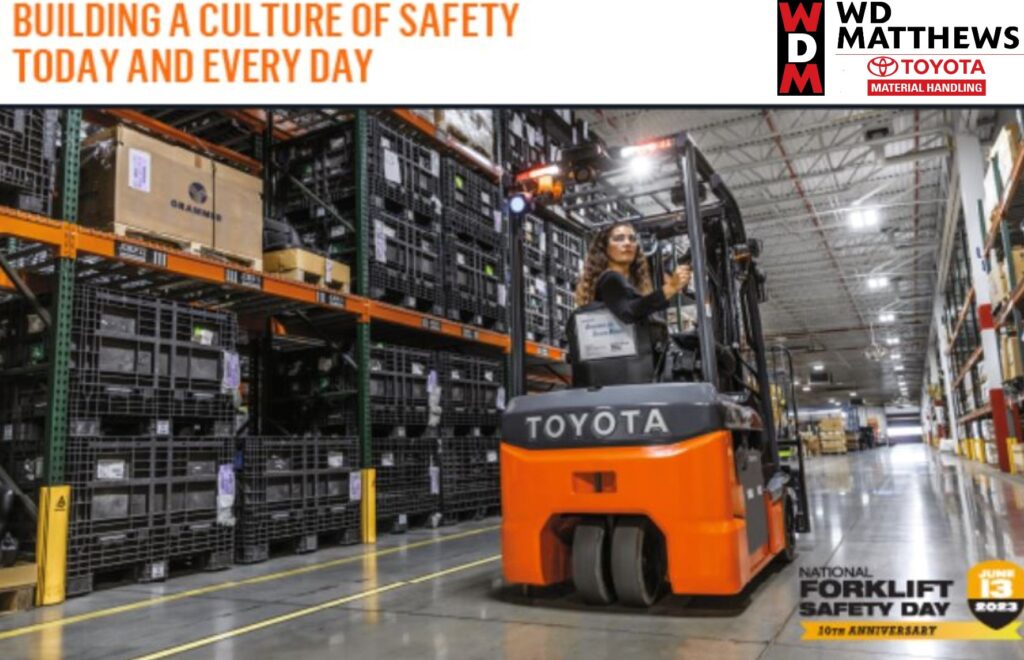
National Forklift Safety Day is an important reminder that forklift safety training should never be limited to a single day or month. Safe forklift operation requires ongoing commitment from employers, operators, and pedestrians throughout the year.
Creating a safer workplace starts with proper training, routine equipment inspections, and clear communication. Whether you manage a warehouse, manufacturing facility, or distribution center, following forklift safety best practices can reduce accidents and improve workplace efficiency.
Schedule a Training: Heavy Equipment Safety Training – NH, ME, MA – WD Matthews Machinery Co.
Forklift Safety Training: 3 Essential Tips for a Safer Workplace
1. Ensure Every Forklift Operator Receives Proper Training
One of the most important parts of forklift safety training is making sure every operator is properly certified before using powered industrial trucks.
OSHA regulation 29 CFR 1910.178(l) requires employers to train and evaluate forklift operators before they operate equipment. This requirement helps reduce workplace accidents and injuries.
According to the National Safety Council, operator error contributes to approximately 70% of industrial accidents. OSHA also estimates that proper forklift training can reduce accident rates by 25% to 30%.
To maintain compliance and improve workplace safety, employers should:
- Train operators before they use a forklift.
- Provide equipment-specific training for every type of forklift operated.
- Reevaluate operators at least every three years.
- Ensure operators understand the manufacturer’s operating manual and safety procedures.
Well-trained operators make better decisions, recognize hazards sooner, and help create a safer work environment.
2. Know Your Forklift and Your Facility
Every forklift operates differently. Operators should understand the controls, capacity limits, safety features, and maintenance requirements for each piece of equipment they use.
Daily pre-operation inspections help identify issues before they become safety hazards. Operators should check:
- Tires
- Forks
- Hydraulic systems
- Brakes
- Steering
- Warning lights and alarms
- Fluid levels
Operators should also become familiar with the facility layout. During forklift operator training, they should learn:
- Traffic patterns
- Loading and unloading zones
- Narrow aisles
- Blind corners
- Dock areas
- Pedestrian crossings
Understanding both the equipment and the workplace helps reduce accidents and improves operational efficiency.
3. Stay Aware of Your Surroundings
Forklift safety is everyone’s responsibility. Operators and pedestrians must remain alert whenever forklifts are in operation.
Employees should:
- Use designated pedestrian walkways.
- Wear required personal protective equipment (PPE).
- Make eye contact with forklift operators before crossing travel paths.
- Stay clear of blind spots and turning forklifts.
- Avoid distractions while walking through warehouse areas.
Forklift operators should always drive at safe speeds, sound the horn at intersections, and remain aware that pedestrians may enter their path unexpectedly.
A workplace culture built on communication, awareness, and accountability significantly improves overall warehouse safety.